

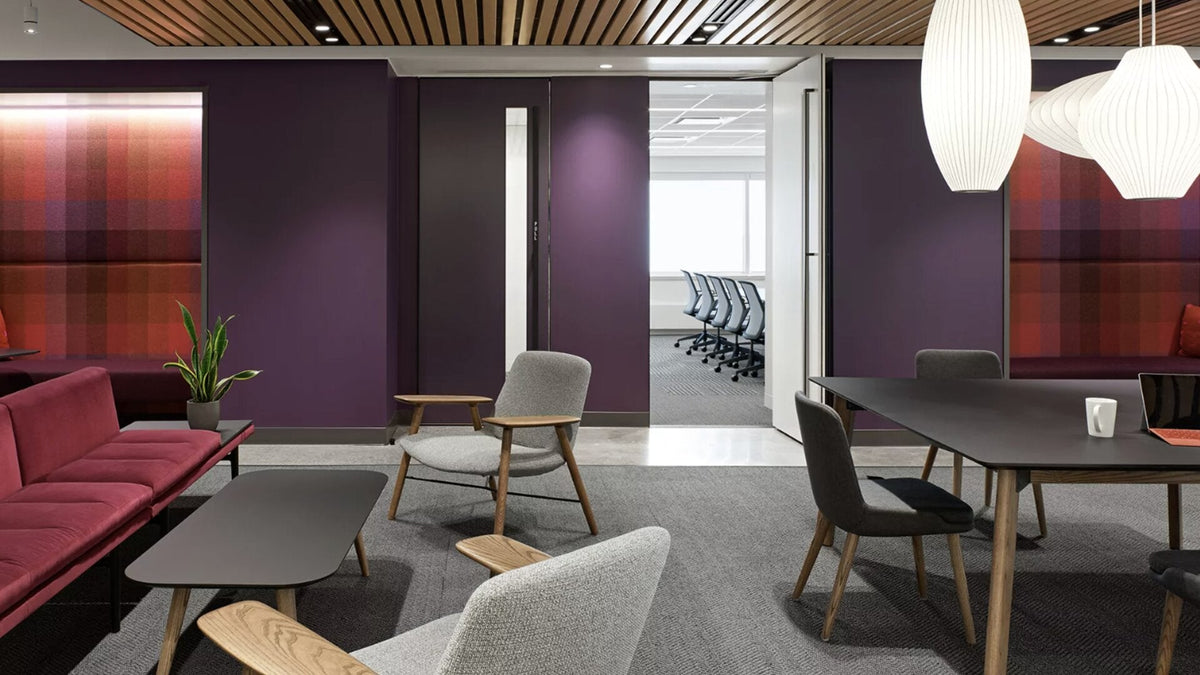
The office trends worth acting on in 2026 are not about colours or statement light fixtures. They are structural: how the space is zoned, how it supports focus and wellbeing, how sustainably it is built, and how long the furniture lasts. Those are the ones that change how an office actually works. This is a practical look at the 2026 workplace design trends that matter for Ontario employers, what each one means for the furniture you buy, and a top pick for the trend that defines the year.
Brant Business Interiors, a family-owned division of Office Central Inc., in business since 1964, plans and furnishes Ontario workplaces, so this guide is about trends you can act on, not a mood board. Each one points to a decision worth getting right.
The 2026 office design trends that matter
Across the major 2026 workplace design studies — Gensler's Design Forecast 2026 and its "6 Trends Shaping Design in 2026," the Gensler 2026 Global Workplace Survey of more than 16,000 office workers across 16 countries, and JLL's Global Design Perspectives 2026 — the same structural themes recur, and they line up with the year's most-cited trend lists from firms like Office Principles and Gable. Here are the substantive ones and what each one asks of your furniture.
| Trend | What it means | What it needs |
|---|---|---|
| Hybrid and flexible layouts | Spaces that flex as in-office days and team sizes change | Modular, reconfigurable furniture and shared desks |
| Activity-based zoning | One floor zoned for focus, collaboration, and meetings | A mix of open desks, private and focus space, and meeting rooms |
| Acoustic and quiet spaces | Somewhere to take a call or focus on an open floor | Acoustic pods, phone booths, and screening |
| Wellbeing and ergonomics | Movement and comfort treated as productivity, not perks | Sit-stand desks and commercial-grade ergonomic seating |
| Sustainability and local sourcing | Lower-impact materials and shorter supply chains | Durable, recyclable, and Canadian-made furniture |
| Durability over disposability | Fewer, better pieces that last instead of frequent replacement | Commercial-grade, third-party-rated furniture |
Hybrid, flexible, and activity-based
The biggest structural shift is away from rows of identical desks and toward a floor zoned for different kinds of work: open areas for collaboration, private and focus space for heads-down work, and meeting space sized to how teams actually meet. Hybrid attendance makes flexibility the priority, so modular furniture and shared or sit-stand desks that suit whoever uses them are replacing fixed, one-person setups. The practical version of this trend is simply planning the zones deliberately rather than defaulting to one open plan.
Acoustic and quiet spaces
As open and collaborative floors became standard, the missing piece, somewhere to focus or take a call, became the most requested upgrade, and it now tops most 2026 trend lists. That shows up as acoustic pods, phone booths, and screening built into the plan from the start rather than added later. They give an open office the privacy it lacks without building walls, which is why they are on nearly every trend list.
Our top pick for the defining trend (commercial-grade, Ontario-stocked)
If one trend captures 2026, it is the return of quiet to the open floor, and the most actionable piece is a pod that drops in without construction.
- Our #1 pick: our Pod phone booths. A self-contained, acoustically treated booth for private calls and focused work that delivers and places onto your floor, no permit, no contractor, no leasehold improvement. It answers the single most-requested 2026 upgrade, somewhere to take a call, faster and cheaper than building a room.
- For the wellbeing trend: pair it with sit-stand desks and commercial-grade ergonomic seating, the most concrete way to turn the wellbeing trend into furniture people actually use every day.
Wellbeing and ergonomics
Wellbeing has moved from a perk to a design principle, and the most concrete part of it is ergonomics: sit-stand desks that let people move through the day and commercial-grade ergonomic seating that supports them properly. Treating movement and support as productivity, not luxury, is the through-line, and it is the easiest trend to act on because it is just better furniture where people work.
Sustainability and Canadian-made
Lower-impact materials, recyclable construction, and shorter supply chains are a growing priority, and for Ontario buyers that overlaps neatly with buying Canadian. Choosing durable, Canadian-made office furniture can shorten shipping and support local industry, and durable furniture is the kind that stays out of landfill longest. Sustainability and durability are really the same trend seen from two angles.
Durability over disposability
The quietest but most important 2026 trend is a move away from cheap, disposable furniture toward fewer, better, longer-lasting pieces. Commercial-grade, third-party-rated furniture costs more up front and far less over its life, and it is the foundation every other trend sits on, because flexible, wellbeing-focused, sustainable design only works if the furniture lasts. The trend, in plain terms, is buying well once.
How to apply the trends to your office
You do not need to chase every trend. Pick the ones that fit how your team works, usually a zoned, flexible layout with real focus and meeting space, ergonomic and sit-stand options where people work all day, and durable, ideally Canadian-made furniture throughout. The fastest way to turn the trends into a plan is a free design consultation that maps the zones, the furniture, and the budget for your actual space. Brant Business Interiors does that across Ontario.
Frequently Asked Questions
What are the biggest office design trends for 2026?
The substantive ones are hybrid and flexible layouts, activity-based zoning of a single floor, acoustic and quiet spaces, wellbeing and ergonomics, sustainability and local sourcing, and a shift toward durable furniture over disposable. They share a theme: designing the space around how people actually work, on furniture built to last, rather than chasing looks.
What is activity-based zoning?
Activity-based zoning means designing one floor with distinct areas for different kinds of work, open space for collaboration, private and focus areas for heads-down work, and meeting space, rather than a single uniform layout. It lets people choose the right setting for the task, which is why it is replacing the static open plan in 2026 workplace design.
Are open-plan offices still a trend in 2026?
Open plan has not disappeared, but the pure open floor has given way to zoned, activity-based layouts that pair open collaboration areas with focus and quiet space. The lesson of the open-plan era, that people need somewhere to retreat, is built into 2026 design through acoustic pods, focus rooms, and screening rather than walls everywhere.
How does sustainability show up in office furniture?
Through lower-impact and recyclable materials, shorter supply chains, and, above all, durability, since the most sustainable furniture is the piece you do not have to replace. For Ontario buyers it aligns with choosing Canadian-made, which can shorten shipping and support local industry, while durability keeps furniture in use longer.
Do I need to redesign my whole office to follow these trends?
No. The trends are modular: you can add focus pods to an open floor, introduce sit-stand desks where people work all day, or move to durable Canadian-made furniture as you replace pieces. A design consultation helps you prioritise the changes that fit your space and budget rather than redoing everything at once.
The bottom line
The 2026 office trends worth your budget are structural, not stylistic: zone the floor for how people work, build in focus and quiet space, make wellbeing and ergonomics standard, choose sustainable and Canadian-made where you can, and buy durable commercial-grade furniture that lasts. Our top pick for the defining trend is a phone-booth pod, the fastest way to bring quiet back to an open floor. Brant Business Interiors plans and furnishes all of it for Ontario workplaces. Tell us your space and where you want to start. Request a Quote or call 1-800-835-9565.
This article is provided for general informational purposes only and does not constitute legal, financial, procurement, or other professional advice. Pricing and specifications reflect publicly available manufacturer information and Canadian market data and are subject to change without notice. Brant Business Interiors makes no representations or warranties, express or implied, as to the accuracy, completeness, or currency of this content. For details specific to your project, please contact us for a quote or consultation.Published June 4, 2026.