

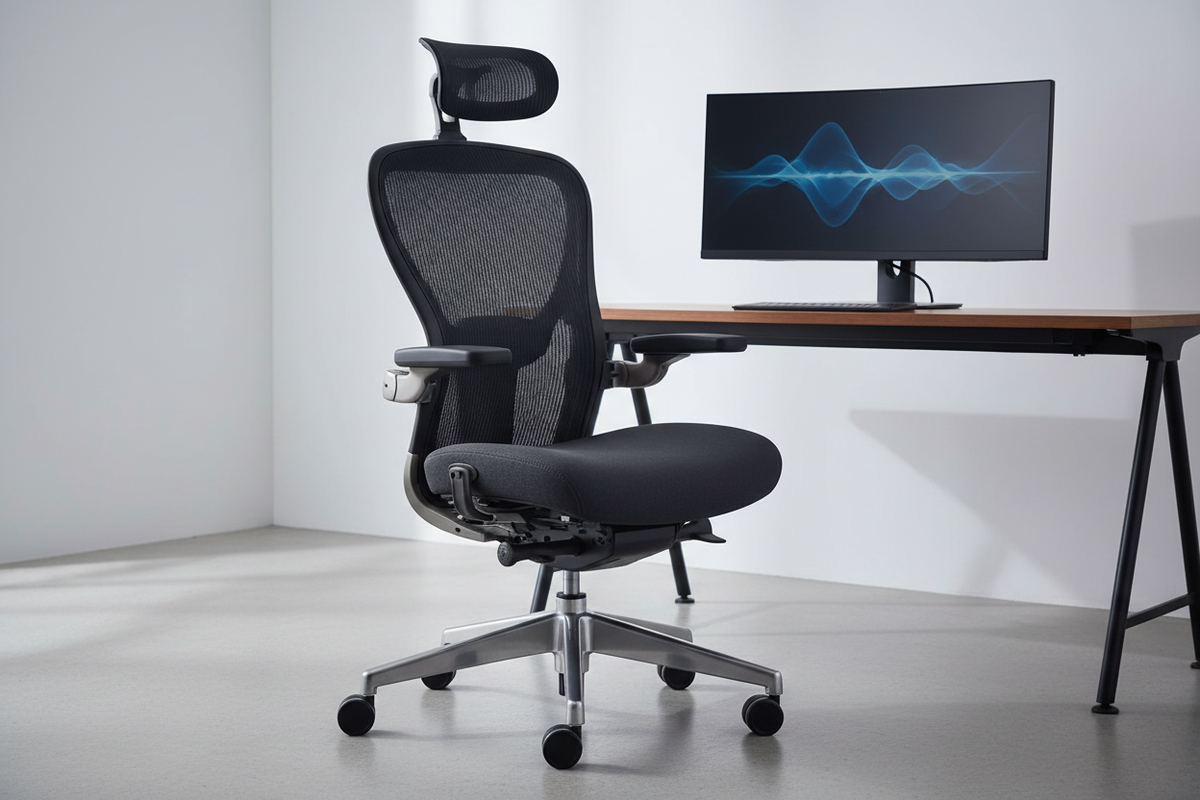
Humanscale and ergoCentric both solve the same problem, an ergonomic chair that fits the person, but they solve it by opposite philosophies, and that is the whole decision. Humanscale designs chairs that adjust to the user almost automatically, with a minimalist approach that strips away most manual levers and knobs. ergoCentric, the Mississauga ergonomic specialist, builds each chair to order from a modular kit so it is configured to the individual body before it ships. One says the chair should adapt to you with no fuss; the other says the chair should be built to you in the first place. Which is right depends on whether you are equipping a fleet or fitting an individual.
Brant Business Interiors, a family-owned division of Office Central Inc., has supplied commercial furniture across Ontario since 1964. We carry both lines, so this is a fit comparison, not a pitch for one logo. Below we set the two ergonomic philosophies side by side, with facts verified against each maker's own materials as of June 2026, and we ground the discussion with a verified, in-stock commercial task chair that represents the conventional fully-adjustable middle ground.
Humanscale vs ergoCentric at a glance
Both are premium ergonomic seating, and both will give a user a properly supported seat. The difference is how you get there: Humanscale through automatic, self-adjusting design, ergoCentric through made-to-order configuration. The table frames it.
| Dimension | Humanscale | ergoCentric |
|---|---|---|
| Ergonomic philosophy | Automatic, self-adjusting, minimal manual controls | Made-to-order, configured to the individual |
| How the fit happens | The chair adapts to the user with little setup | The chair is built to the user before it ships |
| Design ethos | Simplicity and performance, developed with ergonomic experts | Modular fit, "fits virtually 100% of office workers" |
| Strongest for | Fleets, hot-desking, low-fuss deployment | Individual accommodation, accessibility, healthcare |
| Environments | Corporate offices, shared and assigned desks | Office, specialty, and healthcare seating |
| Corporate note | Global ergonomic maker, designed with Niels Diffrient | Canadian, Mississauga, founded 1990 |
| Price tier | Premium | Mid to premium |
Neither philosophy is wrong; they suit different situations. A floor of shared or frequently reassigned desks, where no one wants to relearn a set of levers, leans toward Humanscale's adjust-to-you simplicity. A specific person with a specific need leans toward ergoCentric's built-to-you fit. The interesting cases are in between, and that is where a conventional fully-adjustable chair often wins on value.
Humanscale: ergonomics that adjust to you
Humanscale is a global ergonomic-seating maker whose design ethos is simplicity. Its products, developed alongside ergonomic experts and associated with the pioneering ergonomic designer Niels Diffrient, are built around the idea that a chair should adapt to the user automatically rather than demand a sequence of manual adjustments. In practice that means fewer knobs and levers and a chair that responds to the person sitting in it, which is a deliberate counterpoint to the heavily adjustable, set-it-yourself task chair.
Where Humanscale wins is low-fuss deployment at scale. On a floor of shared desks, a hot-desking environment, or any setting where the same chair serves many different bodies through the week, a self-adjusting chair removes the problem that most people never touch the adjustment levers on a conventional chair anyway. If your ergonomic risk is "nobody adjusts their chair," Humanscale's philosophy answers it directly. Because manufacturing origin and certification vary by line, we confirm both in writing for the specific Humanscale model when they matter to your purchase.
ergoCentric: a chair built to the individual
ergoCentric, based in Mississauga and founded in 1990, describes itself as North America's premier manufacturer of high-quality ergonomic seating for office, specialty, and healthcare environments. Its modular manufacturing system assembles a chair from interchangeable cylinders, backs, seats, and arms so the chair is configured to the user, an approach the company says has let it fit virtually 100 percent of office workers for more than 30 years. Where Humanscale removes adjustment, ergoCentric front-loads it: the fit is decided when the chair is specified, not left to the user.
Where ergoCentric wins is the individual and the edge case. A staff member outside the average size range, a documented accommodation, an accessibility requirement, or a healthcare and specialty setting are all situations where building the chair to the person beats fitting the person to a chair. That is a different value proposition from a fleet chair, and it is why ergoCentric is the line we reach for when the brief names a person rather than a headcount.
Two philosophies, head to head
Because these chairs are not trying to be the same product, the useful comparison is by how the fit is delivered and what that suits.
| Attribute | Humanscale (automatic) | ergoCentric (made-to-order) |
|---|---|---|
| Who sets the fit | The chair, automatically | The buyer, at the time of order |
| Manual adjustment | Minimal by design | Configured up front, then standard task controls |
| Best for a shared desk | Strong: adapts to each user | Less ideal: built to one specification |
| Best for one person | Good | Strongest: built to that body |
| Accommodation and accessibility | Within standard range | Purpose-built strength |
| Deployment effort | Low, little user setup | Specify-and-build per chair |
The conventional middle ground
Between the automatic and the made-to-order sits the conventional fully-adjustable commercial task chair, and for a lot of general seating it is the right value answer. A chair such as the Offices to Go Format high mesh-back synchro-tilter gives a 16 to 20 inch seat-height range, a synchro-tilt mechanism with tilt-lock and tension, a ratchet-adjustable back height, height and width adjustable arms, a breathable mesh back, and BIFMA LEVEL, GREENGUARD, and GREENGUARD Gold certification. It is neither self-adjusting nor made-to-order; it is manually adjustable to a wide range of users at a value price. For most general desks that is enough, which is why the real fleet decision is often a three-way one.
| Approach | Example | Best for |
|---|---|---|
| Automatic / self-adjusting | Humanscale | Shared desks, hot-desking, low-setup fleets |
| Manually adjustable | Offices to Go Format and similar | General assigned desks on a value budget |
| Made-to-order | ergoCentric | Individual fit, accommodation, healthcare |
Which to choose, by need
The cleanest way to decide is by who sits in the chair and how the floor is used.
| Need | Better fit | Why |
|---|---|---|
| Hot-desking or shared seats | Humanscale | Self-adjusting design suits many users per chair |
| Low-setup fleet deployment | Humanscale | Little user adjustment needed to get the benefit |
| Documented accommodation | ergoCentric | Chair built to the individual specification |
| Accessibility or healthcare seating | ergoCentric | Specialist in specialty and healthcare fit |
| User outside the average size range | ergoCentric | Made-to-order components fit the body |
| General assigned desks on a budget | Neither (use a value task line) | A manually adjustable commercial chair is the value pick |
Why the deployment reality matters more than the spec sheet
The strongest argument for each philosophy is not on a spec sheet, it is in how chairs are actually used. A conventional task chair can be brilliantly adjustable and still fail in practice, because a large share of people never touch the levers, sit on factory settings, and inherit whatever the last user left behind. That is the gap Humanscale's automatic design is built to close, and it is exactly why a self-adjusting chair pays off on a shared or hot-desked floor where the same seat passes through many bodies. ergoCentric closes the same gap from the other side: if the chair is built to the person, there is nothing for that person to get wrong. The conventional adjustable chair only wins when you can reasonably assume the user, or a facilities team, will set it up once and leave it, which is realistic for assigned desks and unrealistic for shared ones. Matching the philosophy to the deployment, not to the longest list of adjustments, is what actually delivers the ergonomics you paid for.
A worked example: two floors, two answers
Picture an organization with two very different floors. The first is a hot-desking floor where staff sit wherever is free; the same chair serves a different person every day, and almost no one will adjust it. That floor is the case for Humanscale, where a self-adjusting chair delivers a reasonable fit to each user with no setup. The second floor has assigned desks, and among them are three staff with documented accommodations and a couple of people well outside the average size range. Those specific seats are the case for ergoCentric, chairs built to each person. The remaining assigned desks on that floor do not need either; a manually adjustable value chair, set up once, is the right spend. One organization, one project, three answers, each chosen for how its seats are actually used.
How to buy either in Ontario
The efficient seating plan rarely uses one chair everywhere. We specify Humanscale where the floor is shared or hot-desked and low-setup matters, ergoCentric where a person or an accommodation defines the chair, and a manually adjustable value line such as the Offices to Go Format synchro-tilter for general assigned desks, all quoted as a single project. That value line sits within our wider range of commercial task chairs, alongside the deep bench of Canadian-made seating we carry, so one order can blend automatic, adjustable, and made-to-order seating to the actual needs of the floor rather than to a single catalogue page.
For Ontario's public sector, the buying path can also save a tender. Brant Business Interiors is registered under our parent legal entity, Brant Basics, as an authorized OECM Supplier Partner under Agreement 2025-470, so eligible broader-public-sector organizations, including school boards, hospitals, colleges, and municipalities, can purchase eligible furniture through OECM without running a separate competitive process, whether the chair is Humanscale, ergoCentric, or a value commercial line. Our design team helps match seating to roles and accommodations, we deliver and install across Ontario, and because manufacturing origin and certification are line-by-line facts, we confirm them in writing when they matter to your policy. The 13 percent HST applies on furniture in Ontario.
Frequently Asked Questions
Is Humanscale or ergoCentric better?
Neither is better in general; they take opposite approaches to ergonomic fit. Humanscale designs chairs that adjust to the user automatically with minimal manual controls, which suits shared desks and low-setup fleets. ergoCentric builds each chair to order, configured to the individual, which suits accommodation, accessibility, and healthcare. Choose by who sits in the chair: many users per seat points to Humanscale, one specific person points to ergoCentric.
What is Humanscale known for?
Humanscale is known for a minimalist, self-adjusting approach to ergonomic seating, developed alongside ergonomic experts and associated with the pioneering designer Niels Diffrient. The idea is that the chair should adapt to the user automatically rather than rely on a sequence of manual levers, which is a deliberate counterpoint to the heavily adjustable conventional task chair.
How is ergoCentric different?
ergoCentric uses a modular manufacturing system, assembling each chair from interchangeable cylinders, backs, seats, and arms so it is built to the individual user. The company, based in Mississauga and founded in 1990, says this has let it fit virtually 100 percent of office workers, and it serves office, specialty, and healthcare settings. Where Humanscale removes adjustment, ergoCentric decides the fit when the chair is specified.
Which is better for hot-desking or shared desks?
For shared or frequently reassigned desks, an automatic, self-adjusting chair like Humanscale's is usually the better fit, because it adapts to each user without anyone needing to learn or touch adjustment levers. A made-to-order chair is built to one specification, so it is less suited to a seat that many different people use through the week.
Do I need a premium ergonomic chair for every desk?
Usually not. Humanscale and ergoCentric earn their cost in specific situations, low-setup fleets and individual accommodation respectively, while a manually adjustable commercial task chair such as the Offices to Go Format gives general assigned desks a certified, properly adjustable seat at a value price. The efficient plan spends on the specialist approach where it matters and uses a value line for the rest.
Can an Ontario public-sector buyer purchase these without a tender?
Yes, when the supplier holds the right vehicle. Brant Business Interiors is registered under our parent legal entity, Brant Basics, as an authorized OECM Supplier Partner under Agreement 2025-470, so eligible Ontario broader-public-sector organizations can purchase eligible furniture without running a separate competitive process, whether the seating is Humanscale, ergoCentric, or a value commercial line. Call us and we will confirm what is covered for your organization.
The bottom line
Humanscale and ergoCentric are both premium ergonomic makers that reach a good fit from opposite directions: Humanscale by designing a chair that adjusts to you automatically, ergoCentric by building a chair to you before it ships. Reach for Humanscale on shared desks and low-setup fleets where the risk is that nobody adjusts their chair. Reach for ergoCentric when a person or an accommodation defines the seat. And for the general desks in between, a manually adjustable value line is usually the right spend. Brant Business Interiors carries all three approaches, matches seating to the real needs of the floor, confirms specifications and origin in writing, and delivers and installs across Ontario from a single point of contact. Tell us about your space and the industries we serve, and we will help. Request a Quote or call 1-800-835-9565 to start with a free design layout.
This article is provided for general informational purposes only and does not constitute legal, financial, procurement, or other professional advice. Pricing and specifications reflect publicly available manufacturer information and Canadian market data and are subject to change without notice. Brant Business Interiors makes no representations or warranties, express or implied, as to the accuracy, completeness, or currency of this content. For details specific to your project, please contact us for a quote or consultation.Published June 7, 2026.