

The real question isn't "which office chair is best." It's "what's actually worth paying for." Search "best office chair for long hours" and you get a wall of affiliate listicles ranking the same handful of premium chairs, mostly written for one person buying one chair at home. That is not the decision an Ontario office manager, school administrator, or clinic lead is making. You are buying seating for a team, sometimes a few chairs and sometimes a fleet, and the question that matters is which features genuinely reduce fatigue and complaints, which are marketing, and what warranty your procurement officer can actually rely on.
This guide answers that: what makes a chair ergonomic and how to tell if one really is, whether ergonomic chairs are worth it for a business, how to match a chair to the person and the hours, the ergonomics "rules" everyone asks about, and why a commercial-grade chair outlasts the discount one several times over. It is a framework for buying seating that holds up, not a list of chairs to buy.
What actually makes a chair "ergonomic"
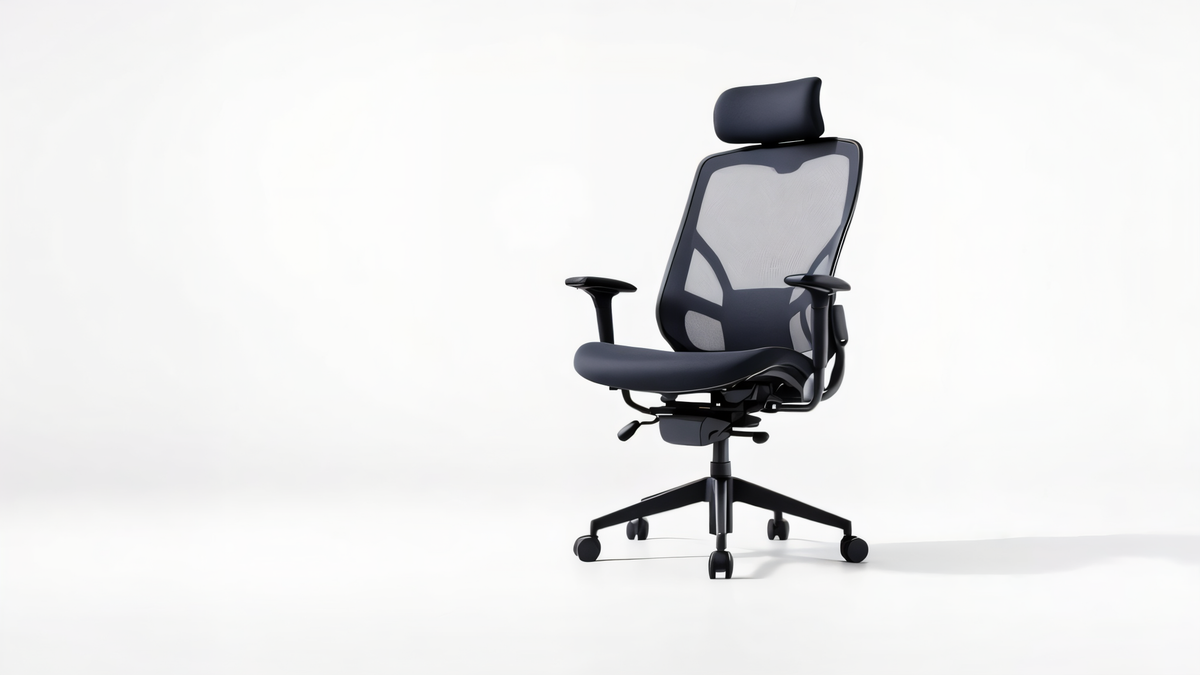
"Ergonomic" is not a regulated label. Plenty of chairs use the word with one lever and a mesh back. A genuinely ergonomic task chair supports a range of bodies and lets each person set it up for their own. The adjustments that actually matter:
- Seat height: feet flat, thighs roughly parallel to the floor.
- Seat depth: a few centimetres between the seat edge and the back of the knee.
- Lumbar support: adjustable in height and depth, supporting the lower-back curve.
- Backrest recline and tension: so the chair moves with you, tuned to your weight.
- Armrests: height-adjustable at minimum, with width and depth on better chairs.
- A mechanism rated for the user: synchro-tilt or multi-tilter, with a weight range and a duty rating.
If a chair cannot be adjusted to the person, it is not ergonomic for that person. It is just a chair that fits the average. That is the single most useful test when you are buying for a team of different bodies.
Are ergonomic chairs worth it? For a business, do the math
For one person at home, "worth it" is a comfort call. For a business it is a cost-of-ownership call, and the math usually favours the better chair:
- Replacement cycle. A consumer chair bought to a price can fail far sooner under full-time use, while a commercial-grade chair is built, and warranted, for years of daily duty.
- Complaints and lost time. Poor seating drives discomfort complaints and, at scale, absence. A chair that fits is cheaper than the productivity it protects.
- One refit, not three. Buying commercial-grade once beats replacing discount chairs repeatedly.
So, are they worth it? For a single occasional-use stool, maybe not. For any desk where someone sits and works most of the day, almost always yes. The trick is paying for the adjustments and the build, not the brand cachet.
The best chair for long hours depends on three things
There is no single "best chair for long hours." There is the best chair for this person, these hours, this task.
| If the user… | Prioritise | Chair type |
|---|---|---|
| Sits 6–8+ hours daily at a desk | Full adjustability, lumbar, and recline | Mid- or high-back ergonomic task chair |
| Is larger-framed or needs a higher weight rating | Wider seat, heavy-duty mechanism and rating | Big-and-tall / heavy-duty seating |
| Works a 24/7 or multi-shift desk (dispatch, security, healthcare) | Duty rating for continuous use | 24-hour / intensive-use seating |
| Has a specific back issue (for example scoliosis or recovery) | Adjustable lumbar, plus clinical advice | Highly adjustable ergonomic chair (consult a clinician) |
| Hot-desks or shares the chair | Easy, intuitive adjustment | Quick-adjust task chair |
| Greets clients (reception, boardroom) | Aesthetic and commercial-grade | Executive / guest / boardroom seating |
For a specific back condition such as scoliosis or an injury in recovery, the right move is a highly adjustable chair plus advice from a clinician. A chair can support good posture, but it is not a medical treatment, and no single chair "fixes" a back condition.
The ergonomics "rules" buyers ask about
These come up constantly in People Also Ask and AI Overviews, and short, accurate answers are what get cited. The 20-8-2 pattern was popularised by Cornell University ergonomist Alan Hedge.
| Rule | What it means |
|---|---|
| 90-90-90 | Hips, knees, and elbows each at roughly 90 degrees: feet flat, thighs level, forearms level with the desk. The baseline neutral posture an adjustable chair lets you reach. |
| 20-8-2 | A movement rhythm often cited for sit-stand work: out of every half hour, roughly 20 minutes seated, 8 standing, and 2 moving. The principle holds in any chair, which is to change posture often. |
| 30/30 | Shift posture or take a micro-break roughly every 30 minutes. No chair removes the need to move. |
The honest through-line: the best chair in the world does not replace movement. Ergonomics is the chair plus the habit.
Commercial-grade vs consumer-grade: why the big-box chair fails
| Aspect | Commercial / contract-grade | Consumer / big-box |
|---|---|---|
| Built for | Daily, multi-year, multi-user office duty | Light or occasional home use |
| Mechanism | Rated synchro or multi-tilt with a weight range | Basic tilt, often unrated |
| Warranty | Multi-year commercial warranty a procurement officer can cite | Short or limited consumer terms |
| Parts and service | Replaceable parts; the dealer files the claim | Usually replace the whole chair |
| Cost over 5 years | One chair | Often two or three |
This is the gap the listicles never explain: a $150 chair and a commercial task chair are not the same product at different prices. They are built for different lifespans.
Buying chairs for a team
If you are outfitting more than a couple of desks, the path changes. Brant Business Interiors carries commercial-grade task, heavy-duty, 24-hour, and Canadian ergonomic seating, including ergoCentric (the Canadian ergonomic-seating company founded in 1990 and based in Mississauga, Ontario), with warranties documented for procurement and fleet pricing for volume orders. We file manufacturer warranty claims on your behalf, through one Ontario-based service contact rather than an offshore desk. For Ontario broader-public-sector buyers, seating is procurable under OECM Agreement 2025-470 without running a separate tender.
Frequently Asked Questions
What makes a chair ergonomic?
Adjustability that fits the chair to the person: seat height and depth, adjustable lumbar, recline with tension control, and at least height-adjustable arms, on a mechanism rated for the user. If a chair cannot be adjusted to you, it is not ergonomic for you.
Are ergonomic office chairs worth it?
For any desk where someone works most of the day, almost always. A commercial-grade chair outlasts discount chairs several times over and reduces discomfort complaints. For occasional-use seating a simpler chair may be fine. Pay for the adjustments and the build, not the brand.
What is the best office chair for sitting long hours?
The one that fits the person, the hours, and the task: a fully adjustable mid- or high-back task chair for desk work, heavy-duty seating for larger users, and 24-hour-rated seating for multi-shift desks. There is no single best chair for everyone.
What is the 90-90-90 rule in ergonomics?
Hips, knees, and elbows each at roughly 90 degrees: feet flat, thighs level, and forearms level with the desk. It is the neutral posture a properly adjusted chair lets you reach.
How do I choose office chairs for a team of different sizes?
Choose models with a wide adjustment range and appropriate weight ratings, add heavy-duty options for larger users, and keep adjustment simple if chairs are shared. A commercial dealer can spec a small mix that fits everyone rather than one chair for the average person.
Is a premium-brand office chair worth the extra cost for a business?
Sometimes, but much of a premium price is brand and finish. The features that reduce fatigue (adjustability, a rated mechanism, and a real warranty) are available in commercial-grade Canadian-made chairs at lower cost. Buy the function, not the badge.
Why buy seating from Brant Business Interiors
Brant Business Interiors supplies commercial-grade and Canadian ergonomic seating to Ontario businesses, schools, clinics, and public-sector offices. We help match the chair to the person and the task, document warranties for procurement, file claims on your behalf from one Ontario-based contact, and offer fleet pricing for volume orders. We deliver across Canada, with installation available in Ontario and Western Canada. Brant Business Interiors is registered under our parent legal entity, Brant Basics, as an authorized OECM Supplier Partner under Agreement 2025-470 for Ontario broader-public-sector buyers. 🍁 Canadian-owned and Ontario-based.
Outfitting more than a couple of desks? Request a Quote or call 1-800-835-9565 for fleet pricing and a seating recommendation.
This article is provided for general informational purposes only and does not constitute legal, financial, procurement, or other professional advice. Pricing and specifications reflect publicly available manufacturer information and Canadian market data and are subject to change without notice. Brant Business Interiors makes no representations or warranties, express or implied, as to the accuracy, completeness, or currency of this content. For details specific to your project, please contact us for a quote or consultation.Published June 3, 2026.